Plated, vermeil or solid gold?
Three words, three very different pieces of jewellery. What each one means in the UK, what the rules say about vermeil, and why some pieces turn your skin green.
Two necklaces can look identical in a photograph and be completely different things. One is gold all the way through. The other is a thin layer of gold over another metal, or no gold at all. The words on the label are how you tell them apart, so it helps to know exactly what each one means.
Solid gold
Solid gold is gold alloy all the way through. In the UK it is sold by carat, and each carat has a fineness number that you will find in the hallmark.
| Carat | Gold content | Fineness mark |
|---|---|---|
| 9ct | 37.5% | 375 |
| 14ct | 58.5% | 585 |
| 18ct | 75% | 750 |
| 22ct | 91.6% | 916 |
The rest of the metal is alloy, usually silver, copper or palladium. It sets the colour and makes the metal harder: pure gold is soft, which is why most everyday jewellery is 9 or 18 carat. Any piece described as gold and weighing a gram or more has to be hallmarked to be sold as gold in the UK.
Gold plated
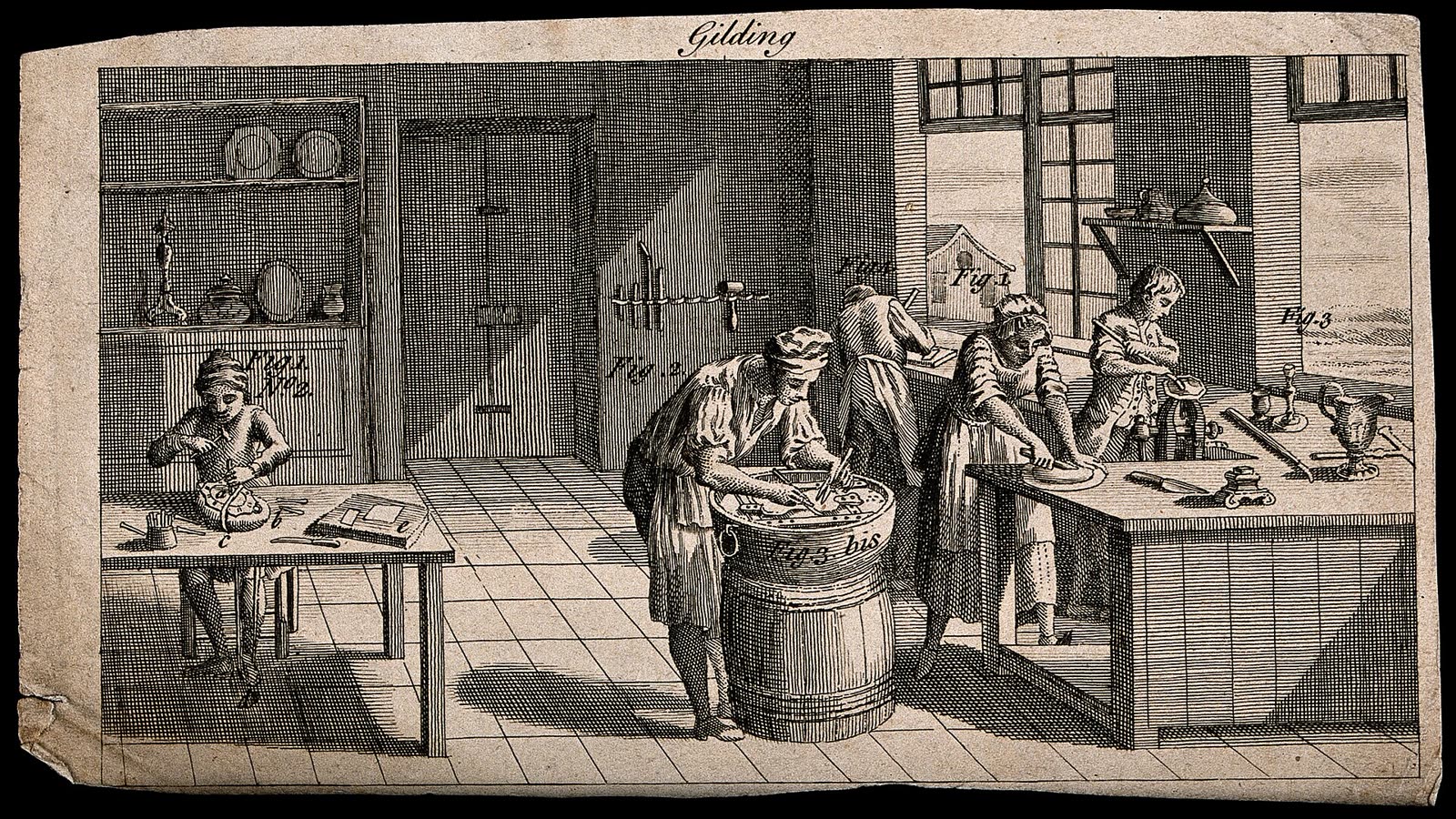
Gold plating is a thin layer of gold bonded to another metal, usually by passing an electric current through a bath of gold solution. The layer is measured in microns, thousandths of a millimetre, and on most plated jewellery it is very thin. It looks like gold on day one. With friction, perfume and time, it can wear through to the metal underneath, most often on the parts that rub: the inside of a ring, the back of a clasp.
Vermeil
Vermeil (say it ver-may) means gold plated silver. In the United States, the Federal Trade Commission's guides set a definition: a sterling silver base with a gold layer of at least 10 carat and at least 2.5 microns thick.
The UK works differently. Guidance from the British Hallmarking Council says that a gold plated silver piece must be described as silver, with the word plated directly after gold, and that the gold layer should be at least 375 fine, the same as 9 carat. Vermeil is allowed only as an extra word, never on its own. The guidance gives the example of an 18ct gold plated vermeil silver ring.
In the UK, vermeil is allowed only next to the plain words: gold plated silver.
So if a British shop describes a piece only as vermeil, it is leaving out the words the rules require.
Gold-tone and PVD
A great deal of modern everyday jewellery is stainless steel with a gold-tone coating applied by PVD, physical vapour deposition. The coating is laid down in a vacuum chamber and bonds closely to the steel, which makes it far harder-wearing than ordinary plating. The honest word for it is gold-tone: it describes the colour, and it does not claim a gold content. Stainless steel also does not tarnish, which is why it has become so popular for pieces worn every day.
Why some jewellery turns skin green
The green mark comes from copper. Many base metals contain it, and so do lower-carat gold and sterling silver alloys. When copper meets sweat, skin oils and the slight acidity of skin, it forms green copper salts that rub off onto the finger. It is harmless and it washes off.
It happens most with plated pieces once the plating has worn thin, and with cheap alloys high in copper. Higher-carat gold, stainless steel and titanium rarely do it.
What to ask before you buy
- What is the base metal? Silver, brass, copper or stainless steel make very different pieces.
- If it is plated, what is the gold? A carat and a thickness tell you far more than the word gold.
- Is it solid gold? Then ask to see the hallmark, unless it weighs under a gram.
- How should it be cared for? Plated pieces last longest kept dry, away from perfume, and stored on their own.